您的浏览器目前处于缩放状态,页面可能会出现错位现象,建议100%大小显示。(快捷键:Ctrl+0)
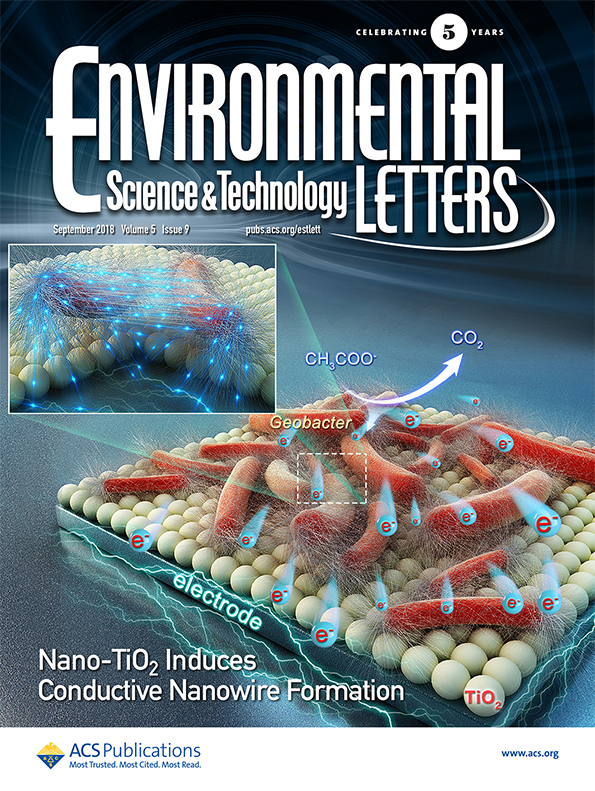
Title:TiO2 Nanoparticle-Induced Nanowire Formation Facilitates Extracellular Electron Transfer
Abstract:Semiconductor nanoparticles (NPs) have been reported to facilitate extracellular electron transfer (EET) by increasing the electrical conductivity of electroactive biofilms. However, the underlying molecular mechanisms remain unclear. In this study, we demonstrated the unique role of semiconductor titanium dioxide (TiO2) NPs in facilitating EET from Geobacter cells to an electrode. Compared to other NPs that include conductor carbon, semiconductor α-Fe2O3, and insulator SiO2, TiO2 NPs improved the bacterial EET capability most significantly, leading to an approximately 5.1-fold increase in microbial current generation. Cell morphology and gene analysis revealed that TiO2 NPs specifically induced the formation of conductive nanowires by stimulating pilA expression, which primarily contributed to the enhanced EET in biofilms. In addition, TiO2 NPs might compensate for the lack of a pili-associated c-cytochrome OmcS in the EET function. This finding had important implications not only for optimizing the performance of electroactive biofilms but also for modulating the ecological impact of NPs in the natural environment.